 QORPO
Inside QORPO's AI game studio and optional token economy
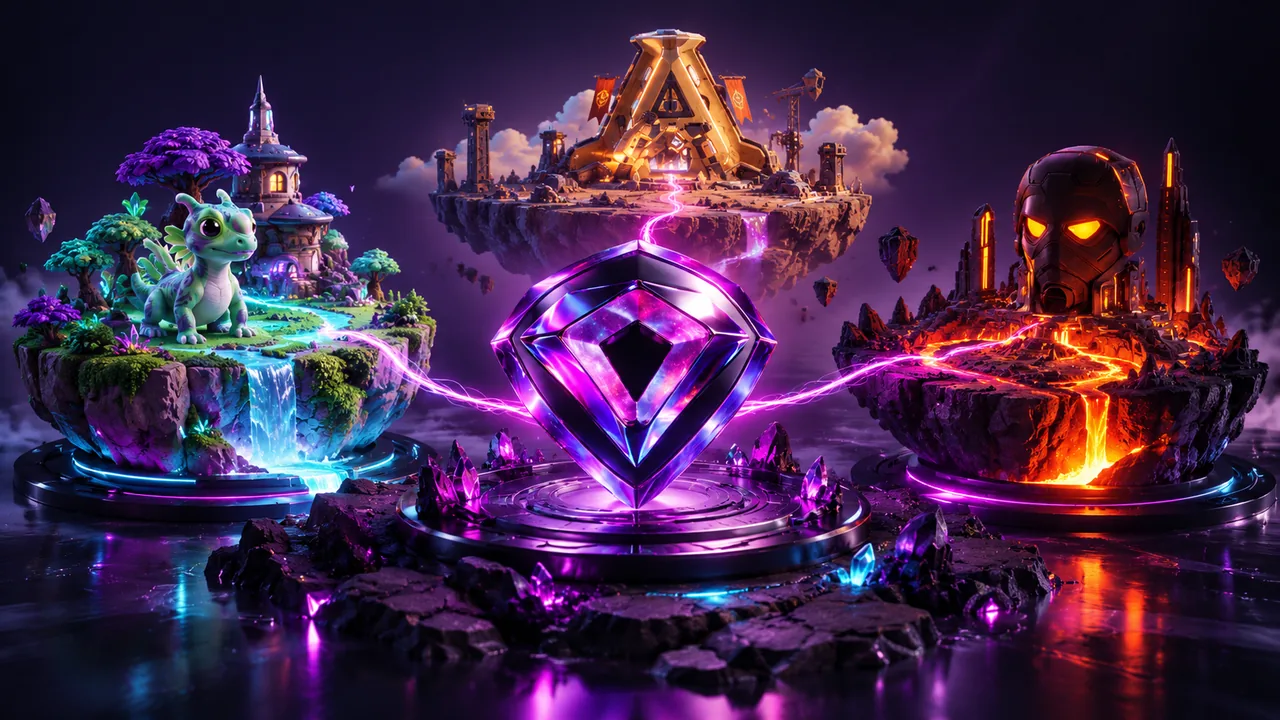
QORPO combines game development, an AI-assisted production direction and an optional blockchain economy. Those parts have different jobs. The studio builds experiences, AI can support iteration, and $QORPO connects selected purchases and ecosystem features. Understanding the connection starts with what each product does today, rather than a prediction about a token's future price.
A useful studio story must work for two readers at once. A player wants to know whether the game is enjoyable and whether a purchase changes the experience in a way they value. Someone evaluating the token wants to understand its actual uses and the evidence behind the model. Neither reader is helped by treating all future possibilities as current revenue.
Start with the products, not the abbreviation
QORPO's public studio overview distinguishes four worlds: AneeMate, One Life, Citizen Conflict and TAMITOS. Their roles and development states differ. AneeMate is presented as playable in Early Access. One Life is an AI-native experiment in development. Citizen Conflict provides the studio's earlier game development context, while TAMITOS is an original entertainment and family-oriented IP.
A portfolio can give a studio several ways to create value, but a list of products is not a financial statement. This article does not imply that every project already produces revenue, contributes the same amount or shares the same audience. The value of a portfolio depends on execution within each product.
For a new reader, playing AneeMate is an accessible starting point. It lets you assess a real game before deciding how much attention to give the broader studio model.
What AI changes in the studio model
An AI-assisted workflow can support research, code navigation, tools and early implementations. Its potential advantage is reducing time spent on repeated work so experienced people can spend more time improving the product. That advantage needs to be evaluated through completed changes, not impressive prompts.
Consider a developer updating a game guide. The work includes discovering the current behaviour, changing the interface, checking the wording and confirming that the published page matches the build. Assistance can shorten parts of that sequence. It cannot remove responsibility for whether the resulting information is true.
The same applies to a new gameplay system. A model can contribute implementation work, but somebody still needs to decide what the player should feel, how the system fits progression and what happens when it fails. QORPO's positioning as an AI game studio should be judged against that complete production cycle.
We are not publishing an audited development-cost reduction or a revenue forecast here. The studio live page makes development activity easier to follow. It is a starting point for inspecting execution, not a replacement for business results.
Two currencies make the AneeMate distinction clearer
The AneeMate gameplay guide separates MATE from $QORPO. MATE is the in-game currency earned through play. $QORPO is an optional blockchain token associated with particular features and purchases. A player does not need a wallet simply to begin the creature adventure.
That separation gives the ordinary game loop room to stand on its own. Someone can explore, catch creatures and build familiarity before considering an optional token purchase. It also makes the buying decision more specific: the user should know which feature requires the token and why they want it.
A clear economy avoids describing every form of progression as income. Earning an in-game currency is not automatically earning a transferable financial asset. Receiving a reward code is not the same as receiving exchange-traded tokens. Good product information keeps those distinctions visible.
Where the token connects to monetisation
An optional economy can create several distinct transaction types. A player might buy a pack, use a supported premium feature or eventually trade an eligible creature. Each transaction needs its own description of what is delivered, what is consumed and who receives the payment.
The current AneeMate pack page is the right place to check the offer before spending. A pack is a randomised product, so the relevant facts include the displayed contents, probabilities and total cost. A rare outcome is not a promise that another player will buy it from you.
The player market page describes P2P trading but was marked Opening soon when reviewed for this article. Its published design includes player-set prices and a fee allocation. That design should not be presented as evidence of current trading volume or guaranteed creator income.
For creators, the separate creator programme describes content submission and reviewed in-game rewards. Those rewards are not a blanket cash revenue share, and the programme does not mean that every creator can mint and sell their own game assets.
Direct token spending and revenue buybacks are different flows
A direct $QORPO purchase within a product is one kind of activity. A studio using a portion of earned revenue to buy tokens from the market is another. Both can involve the same token, but they should not be counted as the same event or described with interchangeable language.
QORPO's token page explains a revenue-funded buyback model with a public log. At review on 19 October 2026, the page stated that the first buyback was still to come. That status matters more than a promotional diagram suggesting that a large flow has already happened.
When transactions are recorded, a useful report should identify their dates, amounts and proof. A burn transaction can demonstrate that tokens were sent to a burn address. It does not independently establish where the funds originated, whether a game is profitable or what the market price will do.
The practical benefit of blockchain here is inspectability. It makes certain events easier to check. It cannot make a business outcome inevitable.
A practical way to evaluate the studio
First, examine a product. Try an available build and compare the experience with the public explanation. Is the first session understandable? Do the systems connect? Can you see the difference between current functionality and a future feature?
Second, follow updates over time. Look for improvements to the actual experience, rather than only new promotional assets. A fixed interaction, clearer tutorial or more reliable build can matter more than a larger feature list.
Third, inspect the optional economy at the point of use. The purchase interface should make the network, amount and outcome understandable. For randomised packs, probabilities and mechanics matter. For a future market purchase, asset identity and listing terms matter.
Fourth, separate evidence from expectations. A roadmap is a plan. A screenshot is a representation of one moment. A commit is a development change. A transaction is a specific on-chain event. Each answers a different question, and none should be asked to prove everything at once.
Why optional ownership still depends on the game
A player can hold an eligible on-chain asset without holding a stake in the studio. Ownership of that asset does not automatically include copyright in the creature, a claim on company earnings or a promise of indefinite server access. Product terms remain important.
Likewise, a transferable item needs another willing participant before a sale can happen. A market interface does not manufacture demand. That is why QORPO's development work and AneeMate's player experience belong at the centre of the story, even for readers primarily interested in the token.
The strongest version of this model connects useful games with understandable optional transactions. More useful activity is a business objective. Price appreciation is not a product feature that the studio can promise.
Questions about QORPO's approach
Is QORPO an AI game studio?
That describes the production direction the studio presents publicly, particularly through the One Life experiment and its wider development activity. It does not mean its games are autonomous model outputs or that human developers are absent.
Does $QORPO represent ownership of the company?
This article describes token utility, not equity. Read the current terms and the specific product use before buying. Do not infer shareholder rights from a token being associated with a studio.
Where should an interested buyer start?
Read the current utility and transaction information, inspect the live work and try AneeMate. If the token has a use you want, continue to the official buying guide and verify the network and contract. A purchase should follow understanding, not replace it.