 QORPO
Web3 gaming gets another chance as AI changes development
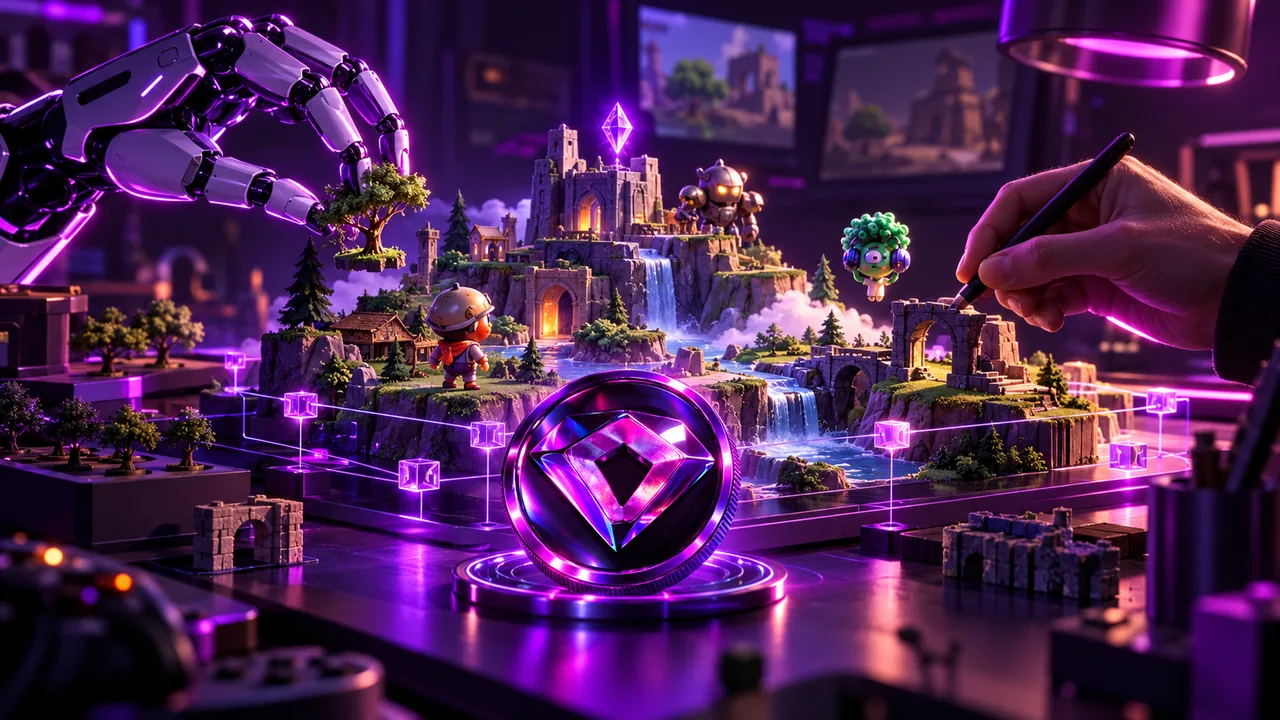
AI gives web3 gaming a stronger development opportunity, but a cheaper prototype is only the beginning. Faster iteration can help experienced teams test better games and support them more consistently. Blockchain then needs a clear job inside those games: optional purchases, transparent transactions or player trading. That is the opportunity QORPO is building around.
The question is no longer whether someone can put a token next to a game. It is whether a studio can make a game people return to, improve it at a sustainable pace and give the token a useful role without making every player become a crypto user. Those are separate problems. Treating them as one was an expensive mistake for the category.
Why development economics matter more than another token narrative
A playable idea passes through many stages before it becomes a dependable product. A creature needs animation, readable movement, attacks, audio, interface states, progression rules and testing. A trading feature needs inventory consistency, transaction handling and recovery when something fails. A polished trailer cannot stand in for any of that work.
When production takes too long, studios have fewer opportunities to discover what players actually enjoy. Teams can spend months finishing a system that looked convincing in a design document but feels awkward with a controller. A smaller team may have to choose between adding a feature and fixing the onboarding that makes existing features understandable.
AI can help reduce friction in parts of this process. The important word is parts. Generating a first implementation, finding relevant code or preparing variations is different from shipping a stable system. Review, integration and playtesting still cost time. The benefit appears when a faster first pass also reaches a useful, tested result sooner.
For QORPO, the practical ambition is an AI game studio that turns more of its time into playable improvements. That positioning is supported by the studio's public presentation of One Life as an AI-native experiment, alongside its existing games and technology. It is an operating direction, not a claim that a model independently makes finished games.
What the AI opportunity actually changes
Imagine two ways to spend a development week. In one, most of the week disappears into setting up a tool before a designer can try an idea. In the other, a developer uses assistance to build an initial tool, reviews it and gives the designer time to compare several approaches. The second process can create more useful feedback without changing the size of the team.
That is an illustrative workflow, not a measured QORPO cost saving. We are not publishing a percentage reduction in our development budget here. To make that claim responsibly, we would need comparable tasks, a baseline, review time and the cost of defects after release. Counting generated lines of code would not provide that evidence.
There is a wider industry signal. In his 12 October statement, Epic Games CEO Tim Sweeney described reorganising work around AI acceleration. It supports the direction of travel for development tools. It does not constitute an endorsement of QORPO, $QORPO or web3 gaming.
The useful conclusion is narrower and more interesting than a slogan: established development organisations are taking AI seriously enough to change how they work. Independent studios have a reason to test the same opportunity against their own constraints and their own players.
Why web3 games still need to earn the player's attention
Lowering development friction does not fix an uninteresting game. It can just make an uninteresting game arrive faster. A strong web3 product must answer the ordinary player questions first. Is movement enjoyable? Do encounters make sense? Can someone understand their first objective? Is there a reason to come back after the first session?
AneeMate gives QORPO a concrete place to answer those questions. The game centres on catching creatures, developing them and playing as them. Building a camp and exploring the island give those creatures a context beyond a marketplace page. Readers can start with the game itself rather than accepting a theory about future demand.
This order matters commercially. If a player enjoys the experience before seeing a token purchase, optional spending has something real to attach to. If a purchase is the only interesting action, the product depends on someone else's willingness to buy later. Those are very different businesses even when both use blockchain.
A useful second chance for web3 gaming therefore starts with better production and better games. Ownership can strengthen that experience, but it should not be asked to substitute for it.
Where blockchain can add something specific
Blockchain is most useful when it makes a transaction or an asset relationship clearer. A player can inspect what a contract does, check a transfer or hold an eligible asset in a wallet. An optional trading layer can give players a way to exchange assets under published rules.
That does not mean every object in a game becomes an independently useful asset. A blockchain record does not force a server to remain online, create a buyer or give its owner rights to the underlying character artwork. The game's terms and technical support still determine what the asset can do inside the experience.
QORPO's approach should be evaluated at the level of actual flows. What does a player buy? Which currency do they use? Where does the payment go? Is the mechanism operating now or described as future functionality? A clear answer to those questions is more valuable than adding ownership language to every paragraph.
Our separate player economy explainer introduces the subject. For a purchase decision, always continue to the current product page and its live terms rather than assuming that every described ecosystem feature is already available.
Why a studio approach is worth following
An experienced studio can carry lessons, tools and technology between projects. A workflow improvement that helps test combat might later help another game's interactions. That is a potential production advantage, although every new project still has its own design and commercial risks.
QORPO presents Citizen Conflict as part of its earlier development foundation, AneeMate as its playable creature adventure and One Life as an AI-native experiment. The distinction is useful. A released experience, an evolving build and a new experiment should not be described as equally mature revenue sources.
The studio live page provides a way to follow development activity. Commits are evidence that work changed. They are not, by themselves, evidence of player retention, profitability or a particular reduction in cost. The strongest assessment combines visible work with the quality of the resulting build.
How $QORPO fits without becoming the whole story
$QORPO is the ecosystem token, with specific optional uses described in AneeMate's economy. Those uses are a better starting point than a prediction about the token's price. Someone evaluating the ecosystem should be able to connect a named use to an actual product interaction.
Keep direct token spending separate from the studio's revenue-funded buyback model. A pack payment that is allocated by a contract is not automatically the same transaction as a later purchase of tokens from the market. The token page explains the published model and provides its buyback log. At the time of this article's review, that page said the first revenue-funded buyback was still to come.
AI efficiency does not guarantee revenue, and revenue does not guarantee token appreciation. The constructive thesis is about execution: can the studio use better tools to build stronger products and give its optional economy more useful activity?
Questions readers should ask
Is web3 gaming definitely back?
This article describes a renewed opportunity, not a verified market-wide recovery. Development tools, player adoption and token markets can move differently. A playable product and a clear economy deserve closer attention than a universal comeback claim.
Does AI make games cheap to finish?
It can make some tasks faster, but integration, direction, testing and support remain. Judge complete production outcomes, not the speed of a demo or the number of generated assets.
What should I do first with QORPO?
Try AneeMate, follow the studio's work and read the current token utility. If you decide the optional token suits your intended use, the buying guide explains the available route. Start with what you want to do, then evaluate the purchase.