 QORPO
TAMITOS Move development: bringing a support reply back into the app
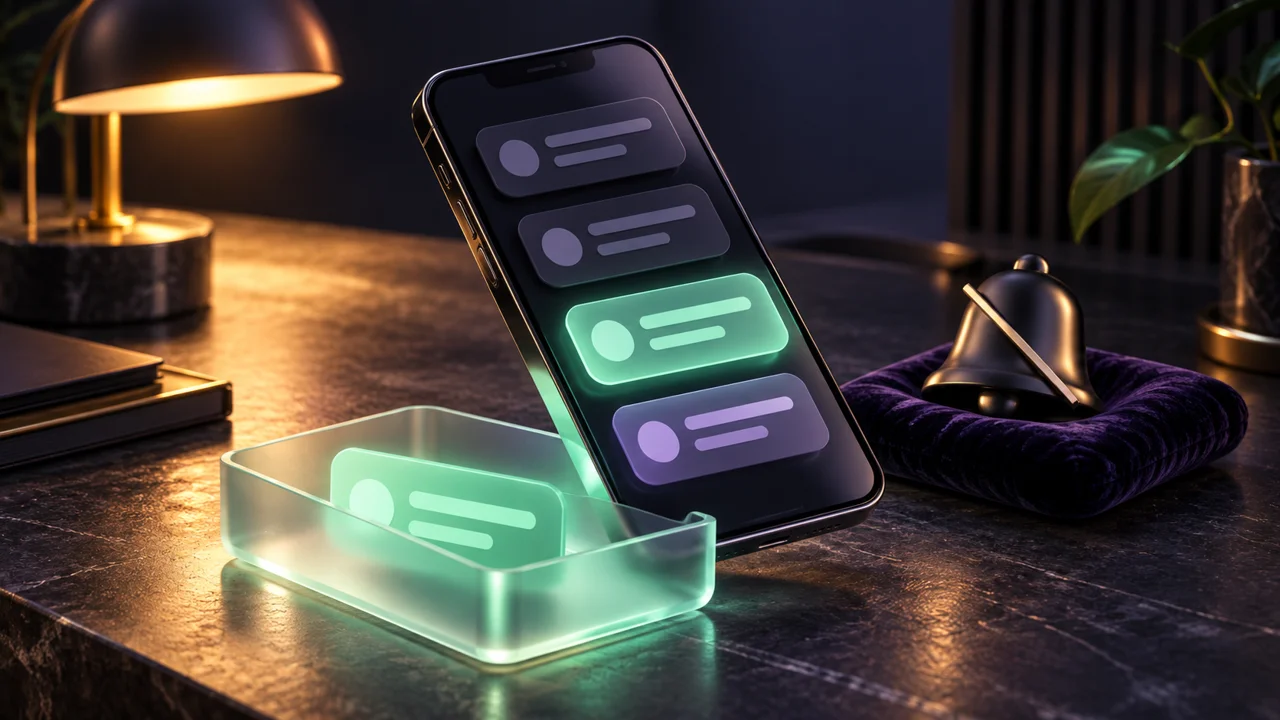
A support reply should reach the person who asked the question, even if a push notification never appears. TAMITOS Move's latest backend update gives the team a way to send an individual reply into the app inbox, with an optional push alert. The service stores the message first and checks whether a push should follow.
This is a focused studio development update, reviewed on 23 October 2026. The change has passed the repository's Move test suite and its production deployment workflow. That evidence establishes a tested and deployed backend path. It does not prove that a particular phone displayed a notification, or that a particular person read a reply.
Why a reply needs somewhere to stay
Consider a familiar support situation. Someone reports that an activity total looks wrong, closes the app and returns to their day. A team member investigates later. If the reply exists only as a push notification, the person may dismiss it, miss it or never receive the alert.
The product question is straightforward: where can that person find the answer when they next open the app?
The new Move service answers with an inbox message associated with the recipient's account. A separate push attempt can draw attention to it, but the stored message does not depend on that attempt succeeding. This separates the content from the interruption.
It is a useful distinction across mobile products. Salesforce's official explanation of mobile messaging types distinguishes push alerts from inbox content that remains available. That is a general reference, not a claim that TAMITOS uses Salesforce or a particular messaging vendor's implementation.
Store the answer, then consider the alert
In the inspected Move implementation, the service validates the message and commits an inbox entry before attempting push delivery. Once that storage step succeeds, the service can return a precise result even if a device is unavailable or a notification cannot be sent.
The team-facing outcome distinguishes a stored message from an attempted alert. That matters operationally. “The answer is in the app” and “the phone was alerted” are different statements. Neither should automatically become “the person has read it”.
Illustrative example: a parent asks why a recorded walk is missing from their history. A support worker has a clarification to provide. The reply is stored in the inbox, but the recipient has push notifications disabled. The worker can see that distinction and avoid assuming that the person was interrupted immediately.
This example describes how the workflow is intended to behave. It is not a customer testimonial, a report of a real account or a promise that a missing activity will receive a particular correction.
Quiet hours remain part of the response
A human reply can be useful without being urgent. The new path checks the existing quiet-hours rule before attempting a push. A message written during that period can remain in the inbox without causing the service to send the alert at that moment.
That is especially relevant to a family-facing product. The time that suits a team member clearing reports may not suit the person receiving them. Leaving the answer available allows those two schedules to differ.
The distinction also prevents an inaccurate claim about scheduling. Suppressing an alert during quiet hours is not the same as promising that a push will be sent automatically when quiet hours end. The inspected path establishes storage and suppression at send time. We are not announcing a new delayed-alert scheduler.
The same care applies to notification preferences. The implementation checks whether the account has push enabled before attempting that channel. Respecting that choice does not require discarding the reply itself.
A support response has a different purpose from a campaign
The new team-message path addresses one person. It is not a new bulk announcement tool. That boundary keeps a response to an individual question distinct from an invitation, a promotional message or a reminder to a large audience.
This difference is easy to lose when teams see all messages as text plus a send button. Their purposes are not interchangeable. Someone waiting for a specific answer has a different expectation from someone receiving an optional campaign.
For the support worker, the update provides entry points from the recipient's detail view and from a submitted report. The report workflow can also mark the report as handled when the reply is stored, if the worker chooses that action. The code does not make every reply proof that the underlying issue is solved.
A useful human procedure is therefore to read the report, investigate what can be established, write an understandable answer and choose the appropriate report state. Software can connect those steps. It cannot decide that an unclear explanation is helpful merely because it was delivered.
What a helpful reply should contain
The following is an original writing checklist for a team response, rather than a description of an automated reply generator:
- Name the question in the user's terms, without asking them to repeat the whole report.
- State what was checked and what remains uncertain.
- Give one next step when there is something useful to do.
- Avoid promising a resolution date that has not been agreed.
- Keep personal or sensitive information out of an unnecessary notification preview.
Illustrative example: “We checked the activity you reported. We still need the time it finished to distinguish it from your other walk. Please include that time in a follow-up report.” This is more useful than a generic “Your request has been processed”, provided the statement accurately reflects the actual investigation.
Move's implementation keeps the longer text in the inbox and creates a shorter push preview. That is a formatting distinction, not a guarantee that a preview is suitable for every subject. The person writing the response still needs to consider what should appear outside the app.
Checks for the situations between success and failure
The added tests cover more than an ordinary send. They include a stored message with push disabled, quiet-hours suppression, unavailable notification configuration, multiple device outcomes and the difference between a short preview and the complete inbox text.
They also exercise an immediate duplicate submission. Within the implementation's defined deduplication window, repeating the same message to the same recipient does not create another inbox entry. This protects against a simple double click. It is not a claim that every conceivable repeated message is suppressed forever.
The console tests cover writing from a user detail, replying from a report, optional report closure and a report that cannot be associated with an eligible account. These are workflow checks, not just text-format checks.
The exact reviewed revision passed the Move test-suite job, and the subsequent deployment job completed successfully. We have not independently demonstrated delivery on every mobile operating-system version. Describing those evidence boundaries is part of the update, not a reason to turn backend test results into an invented device success rate.
How this fits QORPO's product work
Support infrastructure is part of the experience around an app. A product can have a polished activity screen and still leave people confused when a question goes unanswered. This change works on the return path: connecting a team response to the account that needs it, while keeping alerts conditional.
It follows the same evidence discipline discussed in prototype versus production-ready development. Source code establishes an implementation. Tests establish bounded behaviour. Deployment evidence establishes that a revision moved through a release path. A person's experience still needs its own observation.
Our guide to reviewing AI-generated game code applies that distinction to engineering reviews. And the recent TAMITOS publishing-chain update examines a different product boundary: keeping authored information intact on its way to a live page.
To explore the product behind this work, visit TAMITOS, or read what QORPO builds. The aim of this support update is concrete: an individual answer has a place to remain, without treating every useful message as a reason to make a phone ring.