 QORPO
TAMITOS series gallery: keeping the artwork whole as it moves
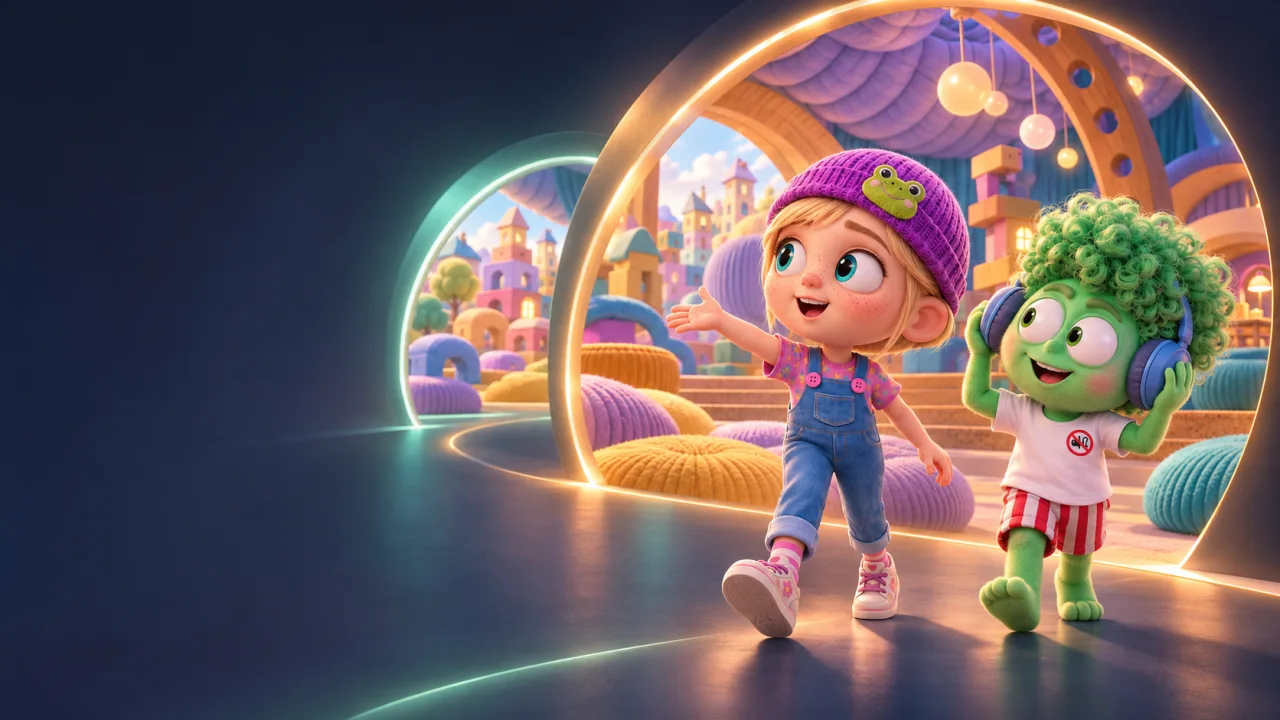
The live TAMITOS series page presents five world renders in a moving gallery without cropping each image into the same shape. The cards can pause under the pointer, and the gallery becomes static and horizontally scrollable when reduced motion is requested. Its image loading also avoids relying on lazy loading inside the moving track.
That is a website presentation change, not an episode release. The series remains labelled in development on the public page. A moving preview can make the world easier to explore without establishing a broadcast date, distribution agreement or finished season.
This explanation follows the current source and live English page checked on 22 November 2026. It focuses on how the existing artwork reaches the visitor.
Why preserve the whole composition?
A character render can contain useful information at both edges. A familiar face, a second character or the relationship between a foreground subject and the environment may be lost when every image is forced into one crop.
The reviewed gallery gives images a controlled display height while allowing their widths to follow their proportions. The surrounding card supplies a consistent frame. It does not make every source image pretend to have the same composition.
The result is a presentation choice. It is not evidence that uncropped imagery is always better. A compact product card may need a different treatment. Here, the gallery’s purpose is to let visitors look inside a visual world, so preserving the scene is a reasonable priority.
What actually changed on the page?
The current build script creates five cards and repeats them for the continuous track. The repeated set is hidden from assistive technology, so the visual loop does not require the same captions to be announced twice.
The separate hero uses a looping video. Those are two different pieces of the page. A gallery card is not a playable episode, and the hero preview does not turn the production status into a release announcement.
Visit the TAMITOS series page for the actual presentation. For the wider studio context, QORPO Live shows why a visible web change and a product’s release status should be read separately.
Why avoid lazy loading on the moving cards?
Lazy loading is useful when content waits below the visitor’s viewport. A continuously moving track introduces a different question: will an image be ready when its card enters view?
The source comments identify blank incoming cards as the reason for changing this gallery’s loading approach. The current card markup does not assign lazy loading. In the live check, all five distinct renders had loaded natural dimensions.
That observation has a boundary. It confirms the reviewed page state in that browser session. It does not guarantee identical arrival times on every connection, or prove that all eager-loading choices improve performance.
What does the motion fallback do?
The gallery’s reduced-motion rule removes the track animation and allows horizontal scrolling. A visitor can then move through a static arrangement rather than waiting for the automatic loop.
Hovering also pauses the animated track in the regular presentation. That can help a pointer user examine one scene. It is a different mechanism from the reduced-motion rule and should not be described as a universal pause control for every input method.
The rule discussed here concerns the gallery. It does not establish that every animation or the separate video hero follows the same policy. Checking one component should not become an accessibility claim about the entire website.
A model review that catches the right problem
Imagine a source render with two characters near opposite edges. A fixed-width crop removes the quieter character, even though the original scene depends on their relationship. The model review asks whether both remain visible in the new card.
Next, imagine a slower connection where the first card looks complete but another arrives blank. That is a loading observation, not an art defect. Capture the card as it enters and record the connection conditions before deciding which part to change.
Finally, inspect the static gallery under reduced motion. The question is whether the visitor can still reach the same five scenes. A stopped animation that hides the remaining cards would not meet that goal.
These are proposed review cases. The current article does not report a new controlled connection test or an accessibility certification.
Keep artwork and status aligned
The scene captions describe the world without turning individual images into episode summaries. That is a useful editorial boundary for a series still in development.
Our TAMITOS publishing-chain explanation covers another place where source content and public presentation need to stay aligned. The Camera Lab article makes the corresponding distinction for a development tool and a finished player camera.
A team can make genuine progress on the page while being precise about what that progress means. Visitors should leave with a clearer view of the world and an accurate understanding of its current availability.
FAQ
Does the moving gallery mean the series is released?
No. The public page still describes the series as in development.
Are duplicate cards additional scenes?
No. The repeated set supports the visual loop.
Does the reduced-motion rule stop the whole website?
This article establishes the gallery rule only.
Sources and next step
Primary evidence is the live series page and the reviewed build-series-video.js implementation in the TAMITOS website source. Explore the actual scenes there, or follow QORPO Studio for the wider product work.