 QORPO
AI-assisted game subtitles: review one exchange in motion
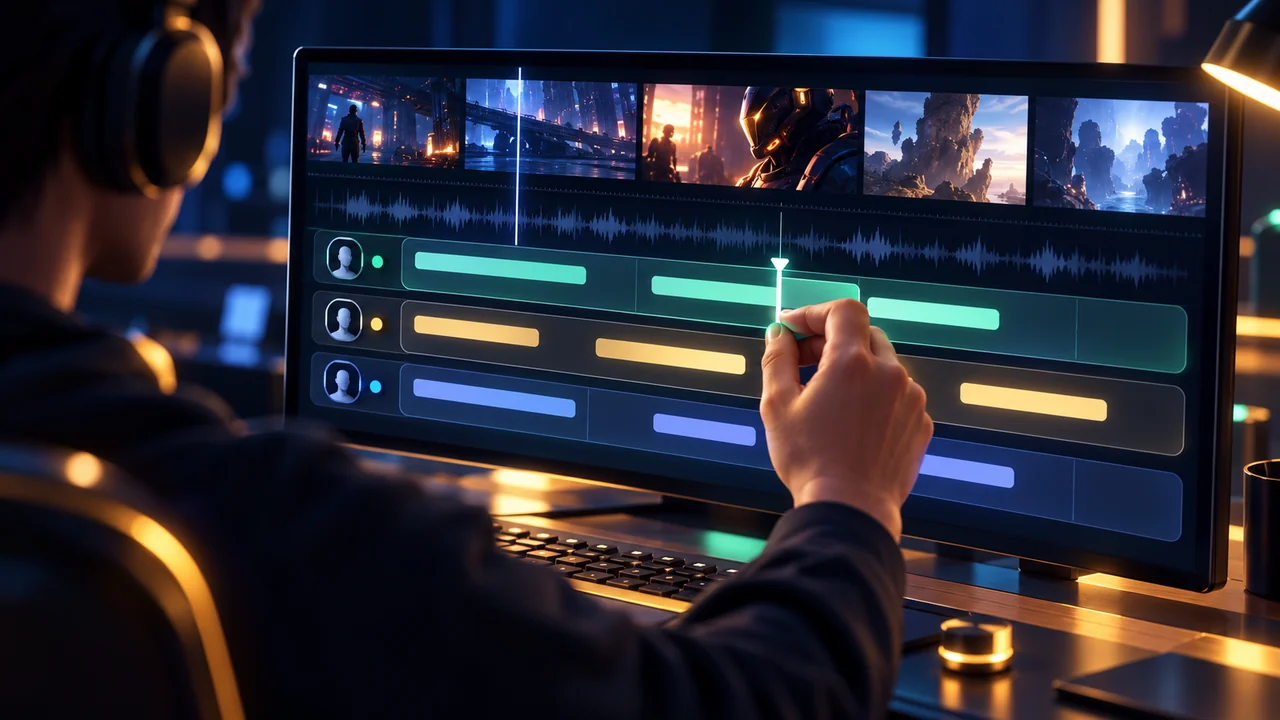
Review AI-assisted subtitles against the actual spoken exchange inside the game, including speaker changes, display timing and the player's other tasks. A clean transcript is only an input. A useful review asks whether someone can follow the exchange while playing, with the sound unavailable and the intended subtitle settings enabled.
This is a proposed review method for one short dialogue exchange. It is not a claim that a QORPO game has passed an accessibility assessment. Microsoft’s Xbox Accessibility Guideline 104 distinguishes speech subtitles from captions for other audio and discusses speaker identification. The exercise below applies those concerns to a small, repeatable production decision.
Start with a fixed exchange
Choose a short scene with a clear beginning and end. Record the content revision, language, build, subtitle setting and the action the player is expected to perform. Keep the same exchange during the first comparison. Otherwise a rewritten scene, a different camera and a new font can all change at once, leaving the reviewer unsure what improved.
For an AI-generated draft, retain a reference to the approved spoken script. Compare names, negatives and objective-bearing words directly. A fluent substitution can reverse an instruction without looking obviously wrong. The human reviewer should resolve the meaning against the approved scene, rather than accepting the model's confidence or adding imagined dialogue to fill a silence.
Separate words from presentation
First check whether the text represents the intended speech. Then review how the game presents it. These are separate decisions: a correct sentence can still appear too late, disappear during an important action or attribute the line to the wrong speaker. Keeping separate findings helps the writer and interface owner understand what each must change.
Use the actual target layout, not a transcript in a document editor. Include the player's HUD and any temporary objective message. A subtitle block that looks comfortable over a blank background may compete with an inventory prompt or cover the object the player needs to inspect. Review the combination before deciding the text alone needs shortening.
Our AI localisation review covers broader language checks. This exercise is narrower: it follows one exchange through time. The small-size icon review offers a similar principle for static assets: inspect the thing where the player actually encounters it.
Run an audio-off pass
Play the exchange with its dialogue inaudible to the reviewer. Check whether the speaker can be identified and whether the reason for the next action remains understandable. This does not reproduce every person's experience. It is a practical way to expose dependence on information that the text has omitted.
Do not invent missing sound descriptions automatically. If a non-speech cue changes the decision, record it for a captioning decision with the scene owner. Subtitles and captions have different coverage. A successful transcript check should not be reported as complete coverage of all meaningful audio in the game.
Model example: two speakers and a closing door
Imagine a prototype exchange: one character says the door is safe to approach; a second warns that the switch must be held. The player is walking towards the door while both lines appear. This is a fictional test scene, not a description of an announced QORPO mission.
Capture three observations. Can the reviewer tell that the warning comes from someone else? Does the instruction remain available long enough to understand before the relevant action? Does another interface message occupy the same space? These observations describe visible behaviour and meaning. They avoid vague findings such as “the subtitles feel bad.”
If the reviewer misses the warning, change one cause at a time. Correct a missing speaker label before comparing alternative timing. Check the revised exchange again with the same movement and settings. Do not declare a timing solution merely because the subtitle was made longer; it might now overlap the next speaker or remain after the scene changes.
Keep the handoff small and reproducible
A useful issue contains the exchange identifier, the exact line, the observed problem, the expected meaning and a short recording. Include the settings that affect presentation. If the failure occurs only when an objective notification appears, say so. The fix owner should not need to reconstruct the scene from a single cropped image.
When using AI to suggest line breaks or revisions, return each candidate to the same review. Preserve approved terminology and speaker intent. The model can offer alternatives; the production check decides whether an alternative works. Keep the original and selected revision so later localisation or voice changes do not silently restore the earlier problem.
Questions from a subtitle review
Is there one timing value that makes every line accessible?
This article does not prescribe a universal duration. Reading demands, line length, player activity and presentation settings vary. Record the actual scene and use relevant accessibility guidance alongside review with people who use those features.
Does passing this exercise establish accessibility compliance?
No. It is one bounded review of one exchange. Coverage across the game, settings, languages and user needs requires wider evaluation. Save the result as a scene-level finding with its limitations.
What is the next useful action?
Choose one exchange and write a clear review record before generating more alternatives. Follow QORPO development coverage for related production methods, and read the primary subtitle and caption guidance when defining the wider quality bar.